

Energy Development Oman (EDO) is undergoing an administrative restructuring to establish intermediate holding companies for its oil, gas and industrial activities, signalling a strategic evolution of the Sultanate’s national energy company as it prepares for potential expansion across the energy value chain.
The restructuring was highlighted by Fitch Ratings in its latest credit assessment of EDO, in which the agency affirmed the company’s Long-Term Issuer Default Rating at ‘BBB-’ with a Stable Outlook. Fitch described EDO as Oman’s national energy company and noted that it owns participating interests in two concessions accounting for around 60 per cent of the country’s oil and gas production.
While Fitch did not provide details of the planned holding company structure, the move indicates an effort to create a more streamlined corporate framework for managing EDO’s growing portfolio of energy assets and activities.
According to industry experts, the establishment of specialised intermediate holding companies could allow greater operational focus across different business segments, including oil, gas and industrial activities, while improving governance, transparency and strategic oversight. The structure could also provide EDO with greater flexibility to attract investment, raise financing for specific projects and develop new ventures without relying solely on a single corporate platform.
The reorganisation comes as EDO continues to expand its role beyond its traditional position as the government’s vehicle for holding interests in Petroleum Development Oman (PDO), the country’s largest oil and gas producer.
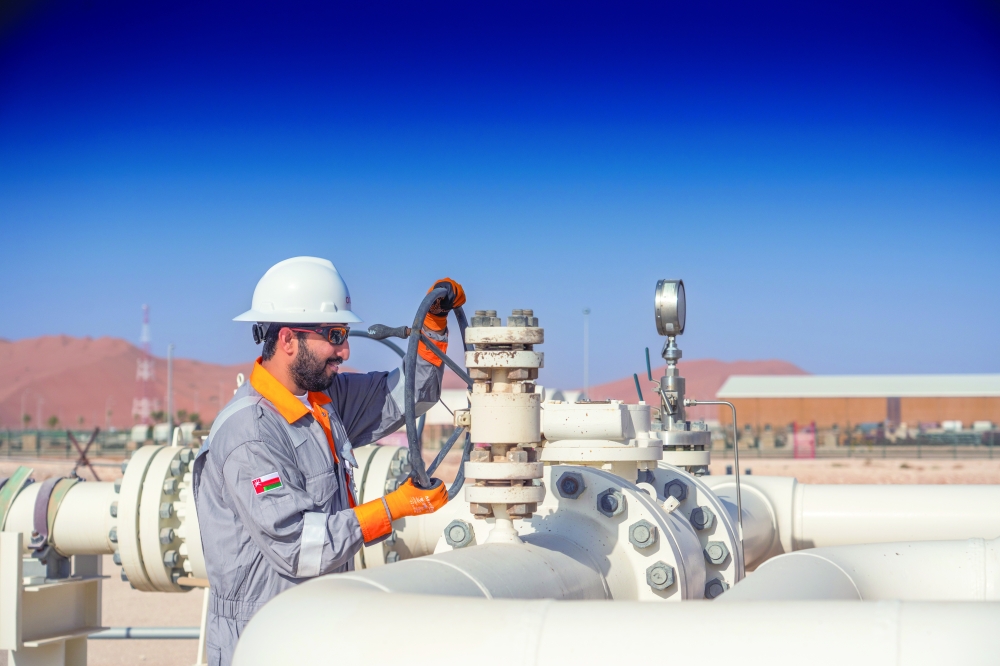
Through its interests in PDO, EDO oversees operations in Block 6, Oman’s largest hydrocarbon concession, which covers more than 24 per cent of the Sultanate’s land area and accounts for the majority of national oil and gas production. PDO remains central to Oman’s energy sector, supplying crude oil and natural gas while supporting domestic industrial and power requirements.
Fitch said EDO’s scale and strategic importance provide significant strength to its credit profile, noting that the company’s operations are expected to deliver average production of more than 850,000 barrels of oil equivalent per day through 2029.
The ratings agency also pointed to EDO’s evaluation of new gas projects that could be integrated with LNG export infrastructure, potentially allowing the company to export gas volumes directly.
Such a move would represent a strategic shift for EDO, traditionally focused on supplying gas to the domestic market, by enabling it to capture greater value from Oman’s gas resources through access to international LNG markets.
Fitch said these projects are not yet incorporated into its rating assumptions and will be assessed once they are formally sanctioned. However, successful implementation could enhance EDO’s revenue diversification, strengthen its position within Oman’s energy landscape and support the Sultanate’s ambitions to maximise the value of its natural gas resources.
The restructuring and potential gas expansion initiatives reflect EDO’s evolving role as Oman develops a more integrated and commercially oriented energy sector, balancing its position as a key national energy provider with ambitions for long-term growth and investment.