


Non-bank lending is expanding fast in Oman, as small businesses shut out of traditional bank credit turn to crowdfunding platforms, invoice finance and other alternative sources to stay afloat.
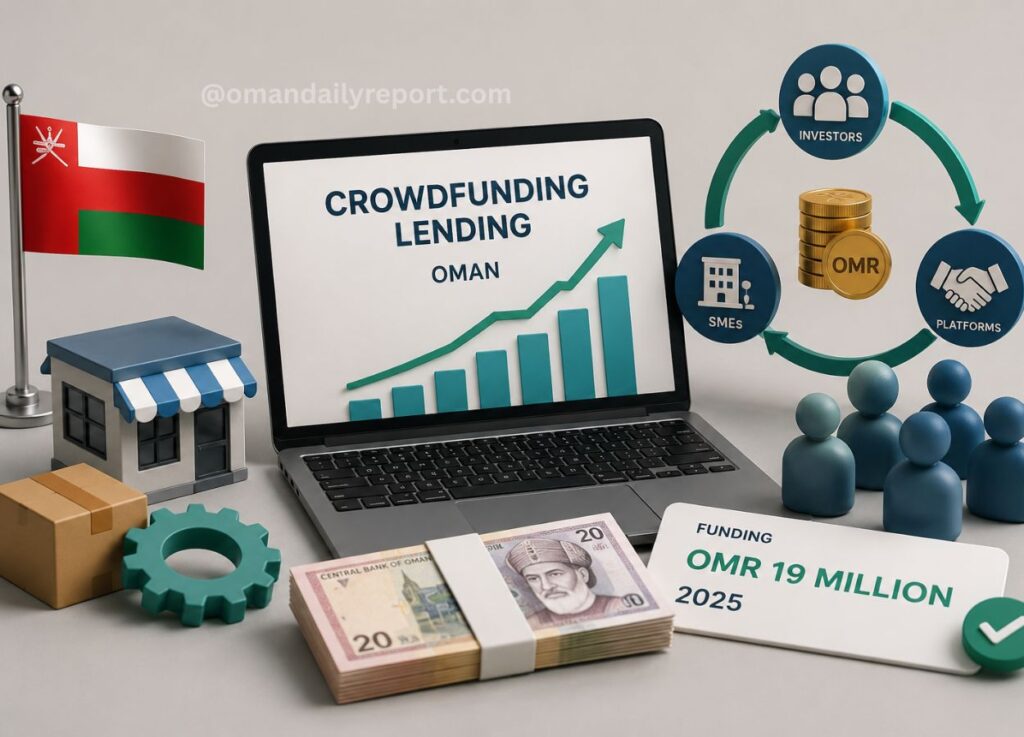
Crowdfunding platforms alone channelled around OMR19 million into Omani businesses in 2025 and more than triple the OMR5.9 million raised a year earlier, according to Shuja Khan, Business Head (GCC) at Graystone Capital. The number of funded projects also more than doubled, rising from 114 to 243.
Since the first licensed platform launched in 2022, these platforms have funnelled a cumulative OMR29.4 million into 357 projects, up from a modest OMR1.7 million across 21 projects in their debut year.
The growth reflects a persistent funding gap: small firms in the Gulf Cooperation Council receive only about 3 per cent of total bank lending, even though the region’s SME financing shortfall is estimated at roughly $250 billion. In Oman specifically, SME lending still hovers around 3.7 per cent of total credit, short of the 5 per cent threshold regulators have set as a target.
Khan attributed the shortfall largely to collateral demands, noting Gulf banks typically require small firms to pledge assets worth 200 to 250 per cent of a loan’s value, compared with roughly 140 per cent for larger companies, a bar many service and technology firms simply cannot clear despite healthy revenues.
Unlike banks, alternative lenders assess businesses by cash flow and sales data rather than asset ownership, allowing faster, smaller, collateral-free loans.
Seven crowdfunding platforms remained active in Oman in 2025, down from nine, which Khan described as evidence that stronger operators are consolidating the market.
Regulation is split between two authorities: the Financial Services Authority licenses crowdfunding platforms, having set a low OMR25,000 minimum capital requirement to encourage local entrants, while the Central Bank of Oman oversees leasing, financing and Islamic finance activities. Supporting infrastructure includes a fintech regulatory sandbox launched in 2020 and the Mala’a credit bureau.
Regionally, alternative lending in the Middle East is projected to grow from $18.9 billion in 2025 to $31.3 billion by 2029, with Oman’s Islamic finance sector alone expected to reach roughly $45 billion in 2026.