


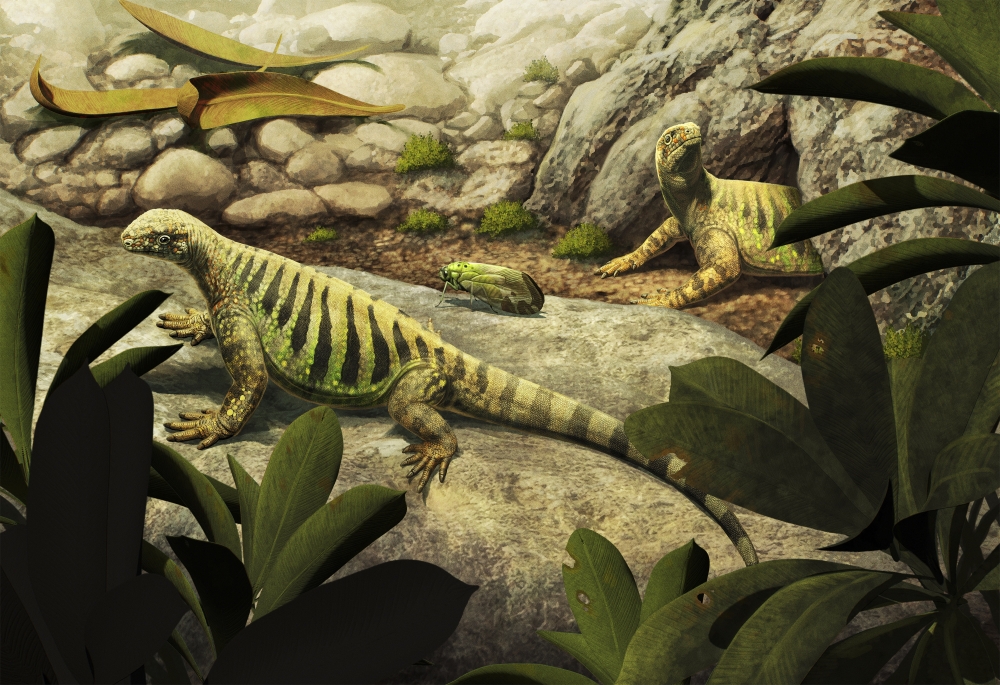
Turtles move around in their own armored sanctuary, have adapted to living on land and in water and are among the longest-living animals on the planet. Their anatomy is so unusual that it’s hard to pinpoint where they belong on the tree of life. Where do they come from? Who, scientists would love to know, is their common ancestor?
Many paleontologists have asserted that turtles originated with an ancient reptile, Eunotosaurus africanus, which lived 260 million years ago and had a broad set of ribs that later developed into a shell. Other studies that focused on genetic evidence, however, have suggested that turtles are actually more similar to crocodiles and birds, and may share a common ancestor with them.
“Turtle origins have always been a tough nut to crack,” said Xavier A. Jenkins, with the American Museum of Natural History in New York City.
In a new study in Current Biology, Jenkins and his colleagues say they have resolved this long-standing debate. They suggest that turtles are not holdovers from the ancient Eunotosaurus but are instead members of a group of reptiles called archosauromorphs that also includes ancient birds, crocodiles, pterosaurs and dinosaurs. And this time, researchers have the anatomical evidence to match the DNA.
When turtles first evolved, the world was just emerging from the Permian-Triassic extinction event, the largest mass extinction that Earth had ever seen. Reptiles were fanning out across the Pangea supercontinent in a rapid succession of new forms. Within 40 million years, turtles would radically change.
This article originally appeared in The New York Times.