


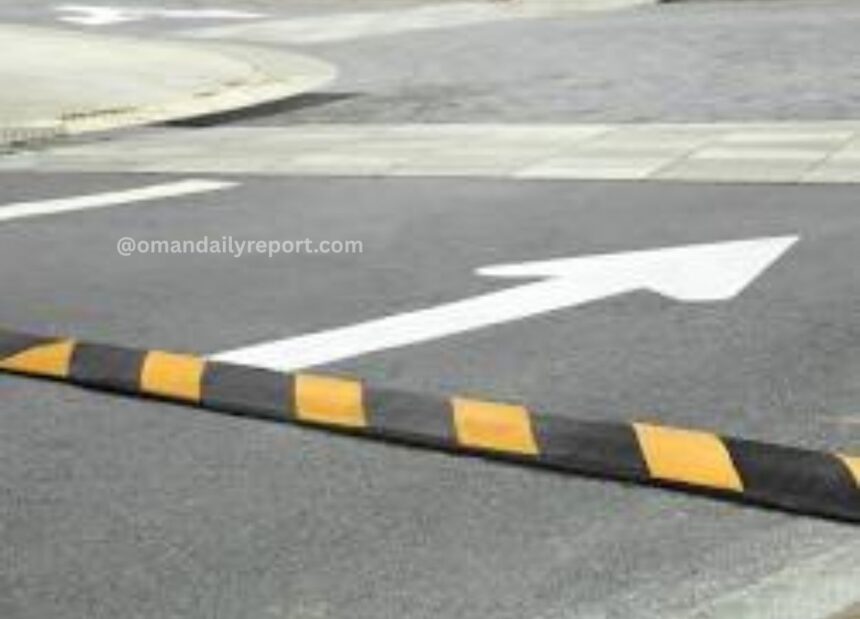
Municipal authorities in the capital have issued a stern advisory targeting the rising installation of unauthorized speed breakers on public roads, reiterating that unpermitted road modifications jeopardize traffic flow and public safety across the governorate.
In an official public notice, Muscat Municipality underscored that community security on local roadways depends on strict adherence to established legal frameworks and engineering standards.
Officials strongly urged residents, property owners, and local entities to refrain from constructing makeshift traffic-calming humps without formal regulatory clearance.

According to municipal guidelines, any newly constructed speed breaker must comply with standardized physical dimensions and strict technical specifications. To safeguard motorists and maintain visibility, authorized installations require advance warning and directional road signs, alongside high-visibility reflective paint applied in approved standard colors.
Furthermore, speed bump approvals are strictly contingent upon formal traffic density studies, engineering assessments, and regional infrastructure needs conducted in coordination with relevant administrative bodies.
To prevent unapproved construction while addressing legitimate community safety concerns, authorities reminded the public that structured legal channels exist to request speed-calming measures within residential neighborhoods.
Citizens and residents seeking speed breaker installations must submit formal requests through designated channels, including the relevant municipal department within their respective wilayat, the local Office of the Wali, or the Traffic Engineering Department at the Royal Oman Police (ROP).
Under local municipal ordinances governing the protection of public utilities, unauthorized alterations or damage to municipal infrastructure—including public streets and roadways—carry regulatory penalties.
Authorities emphasized that adhering to official administrative procedures ensures that traffic safety interventions protect pedestrians without creating hazardous obstacles for drivers or emergency response vehicles.